For an F-6-1 marriage visa, immigration officers assess whether the marriage is genuine, the Korean spouse's income and housing, the couple's ability to communicate, and their health and criminal records. The usual requirements differ depending on whether the foreign spouse is from a country covered by the International Marriage Guidance Program. Where the couple has a child together, exemptions from several requirements and supporting documents apply.
| Applicant's circumstances | Main criteria |
|---|---|
| Spouse from a country covered by the International Marriage Guidance Program | In addition to the basic requirements, the Korean spouse's completion of the program is checked. Exemptions from program attendance based on residence and relationship history, pregnancy, childbirth, or other grounds are also linked to exemptions from health and criminal-record documents. |
| Spouse from a country not covered by the International Marriage Guidance Program | Program attendance is not required, but health and criminal-record documents must generally be submitted. Exemptions from submitting these documents are assessed on separate grounds. |
| Couple with a child born to them | The income and communication requirements and the requirement to submit a criminal record certificate are waived. Evidence of the marriage, the relationship with the child, housing, and other relevant matters is still required. |
A couple relying on exemptions after childbirth because of an overseas criminal record or a gap in Korean income may need to live together in Korea before the birth. The foreign spouse will need a visa that permits residence until the couple qualifies for those exemptions.
Residence before childbirth and a subsequent change to F-6 status
A couple expecting a child who cannot meet the income or communication requirements may consider applying for the marriage visa after the birth. Even where pregnancy provides humanitarian grounds for waiving a criminal record certificate, pregnancy alone does not waive the income and communication requirements. If the couple needs to live in Korea before the birth, the foreign spouse must secure a lawful status covering that period.
If the couple already meets the income and communication requirements or qualifies for exemptions on other grounds, it may be possible to apply for F-6 status before childbirth. Even where an in-country change from a short-term entry status is restricted, a change may be approved following review if pregnancy, childbirth, or other circumstances make it unavoidable. The application must address the circumstances that prevent the couple from leaving Korea to obtain a visa abroad.
If the couple needs the exemptions available after childbirth, potential visas for the intervening period depend on the foreign spouse's education and experience, employment prospects in Korea, genuine business plans, and current immigration status. Where the applicant has an overseas criminal record, each potential visa must also be assessed against its criminal record certificate requirements and restrictions.
For example, a person preparing to establish a technology startup in Korea who meets the relevant education, startup-training, and other requirements may plan to remain under the D-10-2 technology startup preparation status and change to an F-6 marriage visa after the child's birth. If the business becomes operational before then and meets the separate D-8-4 technology startup requirements, an intermediate change to D-8-4 may also be considered. Each stage depends on genuine startup preparation and business activity.
When planning the initial visa, extensions or changes of status, and the F-6 application, the lawyer allows time to register the birth and obtain proof of the family relationship. If the authorized stay expires before those documents are ready, an extension or a change to the next status must be prepared first. Where an extension provides enough time, the applicant can retain the existing status.
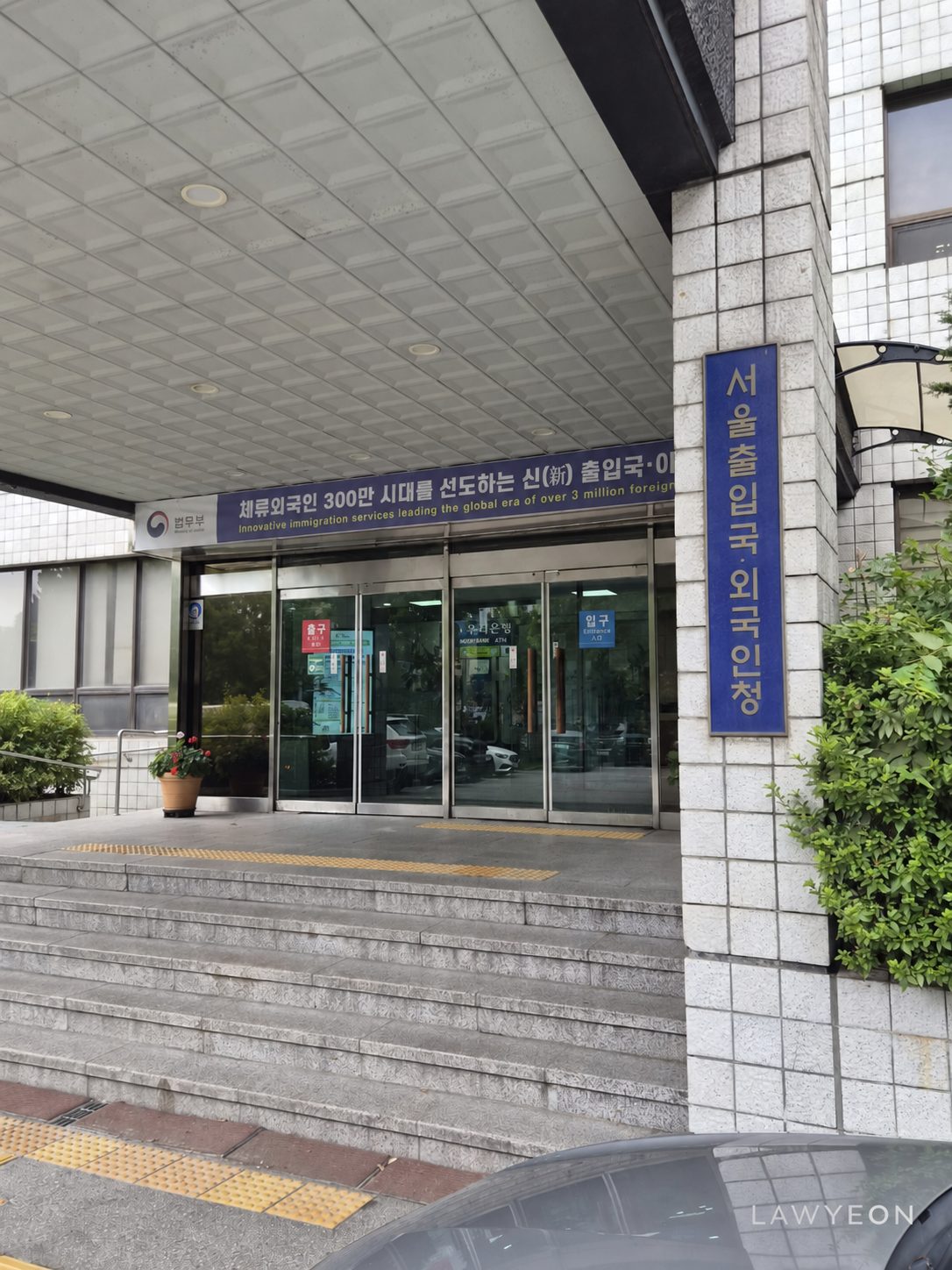
Supplementary evidence and grounds for exemptions
Unusual circumstances involving criminal records or family relationships, or difficulty establishing the necessary facts through documents issued overseas, may call for a lawyer's written submission accompanied by additional evidence. The submission sets out how the relevant circumstances arose, the exemptions or exceptions that may apply, and the evidence supporting their application.
For an exemption based on the couple's shared life abroad, records showing that each spouse was present in a foreign country may not sufficiently establish how long they lived together. The lawyer examines their addresses and residential history to obtain evidence of cohabitation and explains any discrepancies in the dates or information recorded in the documents.
Advance discussions with the responsible office establish what further facts the reviewing officer needs to confirm and what alternative or supplementary evidence can be submitted. If an overseas authority does not issue a certificate in the same format as a Korean document, the lawyer discusses which records can establish the relevant facts and prepares the evidence to meet the confirmed submission requirements. These materials accompany the written submission explaining the client's particular circumstances and the grounds for applying the exception.
Law Firm Lawyeon Immigration Law Center provides legal services specialized in the integrated handling of Korean immigration and visa matters together with criminal cases and immigration-violation reviews, built on extensive case experience, professional networks, and practical knowledge.
The Center brings together attorneys Junwoo Min, Dohyun Nam, and Seungchul Kim, criminal-law specialists with extensive immigration advisory experience, and Senior Advisor Taemin Ahn. Mr Ahn has served at the Seoul Global Center, headed a Ministry of Justice Global Start-up Immigration Center, and served on the Foreign Workers' Rights Protection Council of the Seoul Regional Employment and Labor Administration. Together, they established Law Firm Lawyeon's dedicated immigration practice.
In particular, for departure orders and entry-ban dispositions that follow a final criminal conviction, the Center presents effective solutions through an integrated strategy spanning criminal defense, objections to the disposition, and applications to lift the entry ban, and it supports stable business activity in Korea by managing many clients' immigration risk.