After a stay extension or change of status is denied, the applicant needs to establish whether the missing requirements can be met through reapplication or whether to challenge the denial. An application that failed the income or employment requirements calls for different evidence from one denied because of past violations despite meeting those requirements. A denial issued in Korea can be challenged through an administrative appeal or an action for cancellation.
The departure deadline in a denial notice
The applicant must check the departure deadline stated in the denial notice and any remaining period of stay. The departure deadline and the deadlines for administrative appeals or court proceedings are calculated separately. Starting a challenge does not automatically extend the departure deadline or the permitted stay.
Remaining after the deadline creates an overstay and an additional risk of removal. The overstay record can also count against later applications.
Reasons for denial and information disclosure
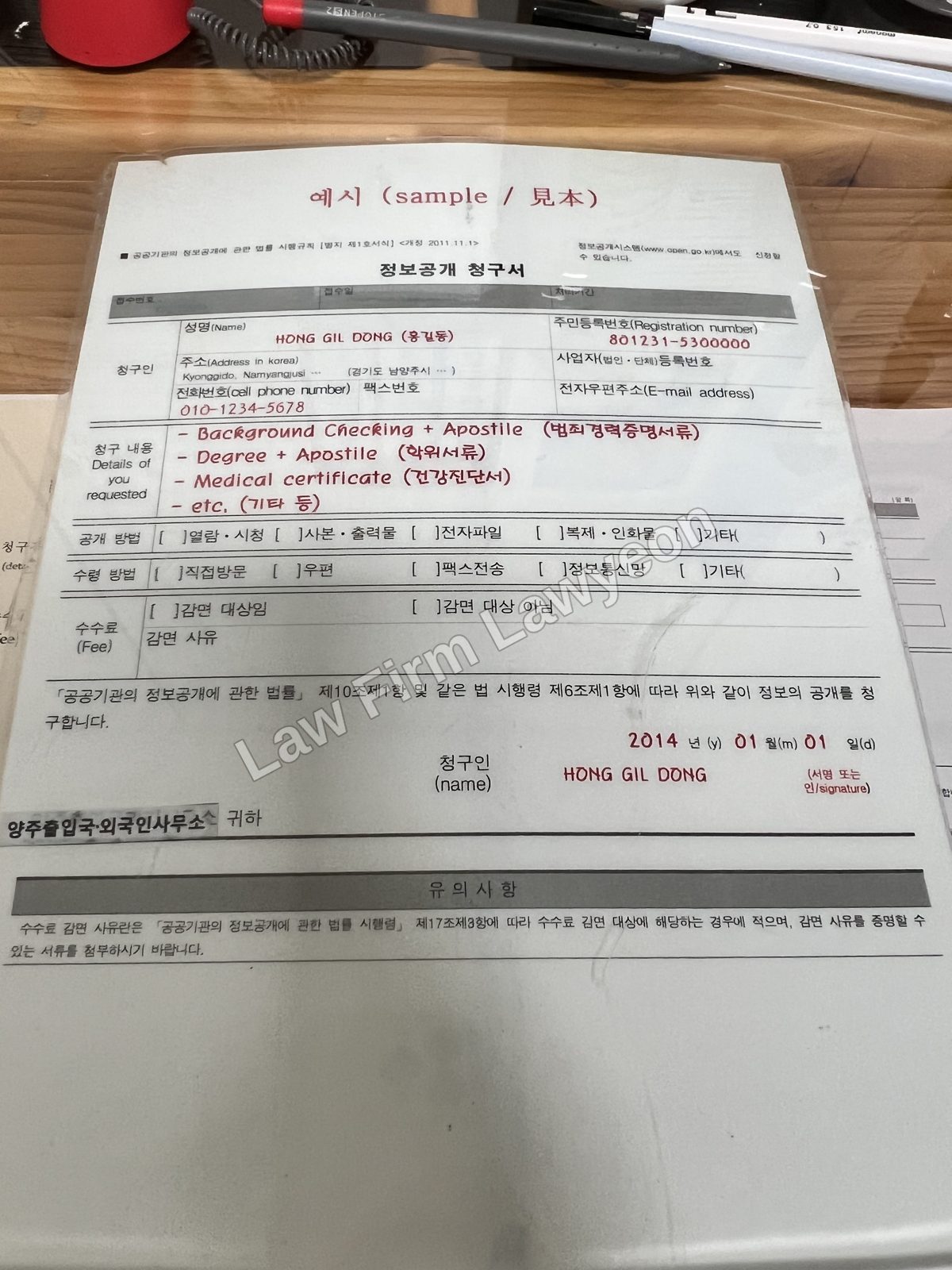
Denial notices often give only a brief explanation. The specific reasons can be requested from the authority or obtained through an information disclosure request. Submitting the same documents without identifying the disputed requirement or record may leave the reason for refusal unresolved and add a repeat-application record.
If income, employment or supporting documents fell short of the requirements, reapplication depends on whether the shortfall can be remedied. If a criminal fine, immigration penalty or other violation caused the denial, the applicable rules and the circumstances of the violation provide the basis for assessing a legal challenge.
Reapplication and challenges to the denial
Applicants who did not meet an income or employment requirement can address the shortfall and reapply. Since the earlier application remains part of the record, the new documents should show what has changed or been supplemented. Inconsistent statements or resubmission of identical documents can count against the application.
Where a denial rests on past violations, or the requirements were met but the application was still refused, proving those requirements again may not address the reason for refusal. The lawfulness of the denial can be contested through an administrative appeal or an action for cancellation. An action for cancellation must be filed within 90 days of learning of the decision.
A refusal to extend or change immigration status issued in Korea can be challenged through an administrative appeal or an action for cancellation.
Proportionality of denials based on past violations
Where income and employment requirements were met but an extension was denied because of past immigration penalties, resubmitting income evidence or the employment contract does not address that history. A challenge can instead examine whether refusing further stay is excessive in light of the nature and circumstances of the violation.
The circumstances and repetition of a violation inform its effect on immigration control. Length of stay, settlement and family relationships in Korea explain the harm a denial would cause to the applicant’s life. Consistency of statements and compliance with procedures are also considered. Evidence of these facts can support an argument that the harm caused by refusing stay is disproportionate to the public interest served.
Appeal deadlines and stay during litigation
Alongside establishing the reasons for denial, the applicant must record when they learned of the decision, the departure deadline and the remaining period of stay. The departure deadline may arrive during litigation even if there was still time to file the action. Interim measures, including a stay of execution, must then be considered alongside the challenge to the denial.
Frequently asked questions
Law Firm Lawyeon Immigration Law Center provides legal services specialized in the integrated handling of Korean immigration and visa matters together with criminal cases and immigration-violation reviews, built on extensive case experience, professional networks, and practical knowledge.
The Center brings together attorneys Junwoo Min, Dohyun Nam, and Seungchul Kim, criminal-law specialists with extensive immigration advisory experience, and Senior Advisor Taemin Ahn. Mr Ahn has served at the Seoul Global Center, headed a Ministry of Justice Global Start-up Immigration Center, and served on the Foreign Workers' Rights Protection Council of the Seoul Regional Employment and Labor Administration. Together, they established Law Firm Lawyeon's dedicated immigration practice.
In particular, for departure orders and entry-ban dispositions that follow a final criminal conviction, the Center presents effective solutions through an integrated strategy spanning criminal defense, objections to the disposition, and applications to lift the entry ban, and it supports stable business activity in Korea by managing many clients' immigration risk.
This article is intended as general information about the relevant legal framework and is not legal advice on any individual matter. Determinations concerning immigration status may differ depending on specific facts such as residence history, income and contractual relationships. If your situation requires individual review, you may request a consultation with the Immigration Law Center of Law Firm Lawyeon (lawyeon-immigration.com).