Immigration review after a final criminal judgment
Once a criminal judgment or summary order becomes final and the outcome is reported to immigration, the enforcement division conducts a review to decide whether the foreign national may remain in Korea. The person receives a summons from the competent immigration office. Paying a fine or receiving a suspended sentence does not prevent an immigration investigation.
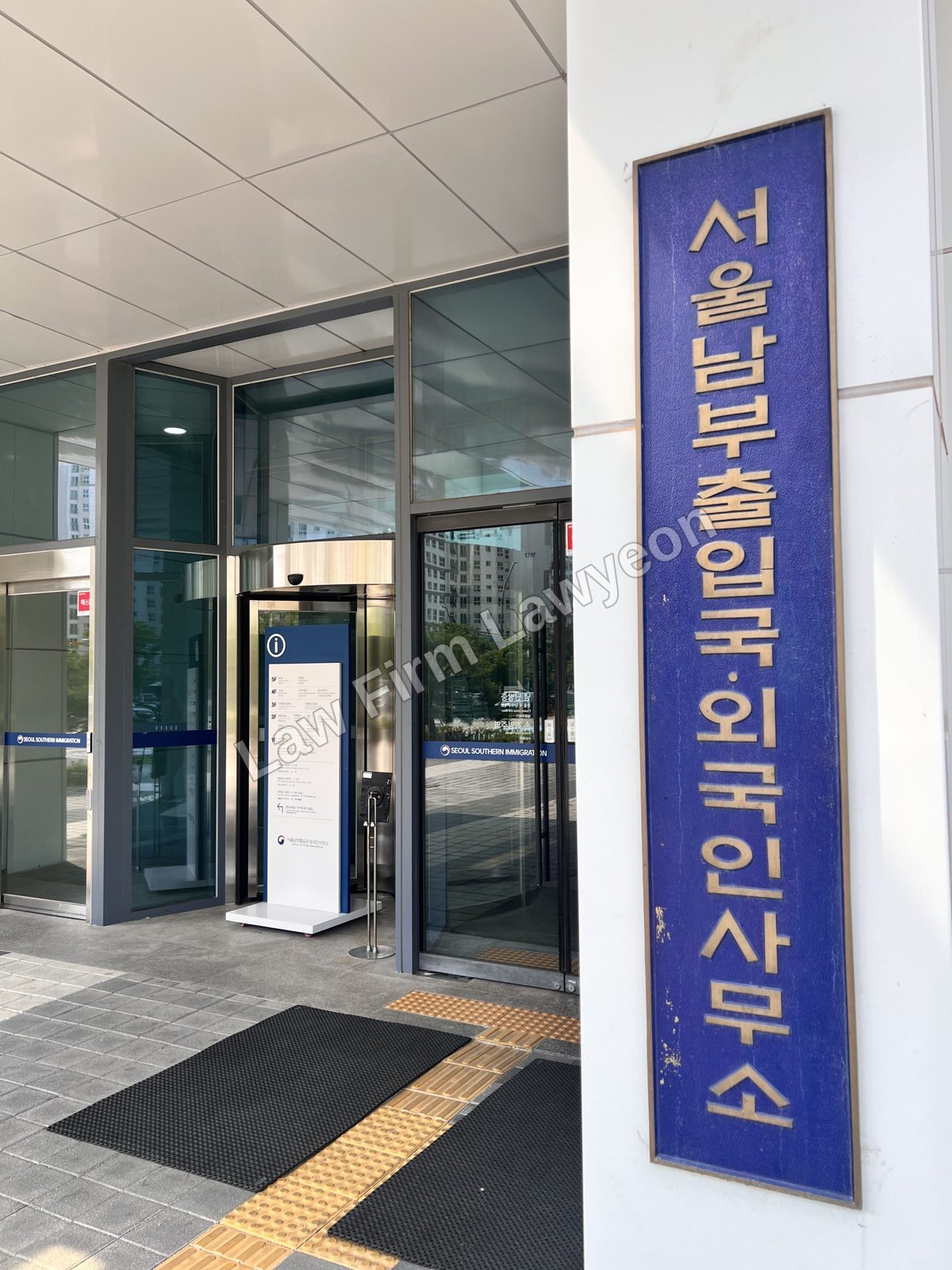
At the interview, an immigration officer exercising special judicial police powers asks about the offence and the criminal outcome. The officer may also request information and records concerning earlier penalties, pending police or prosecution investigations, and ongoing trials. Immigration authorities can obtain criminal records, investigation records and case outcomes from the relevant agencies.
Earlier cases matter because cumulative fines and repeated penalties can trigger removal criteria. A further violation after an earlier immigration review ended with a stern warning and permission to remain may weigh against the person. Pending allegations should be distinguished from final convictions, and the reasons for non-prosecution should be identified so that those cases are not incorrectly recorded as convictions.
Using the interview record and submitted evidence, the enforcement division assesses the offences, penalty history, immigration status and ties in Korea before deciding whether to allow continued residence or order departure. Grounds for continued residence must be submitted before that decision if they are to inform the review.
Removal and entry-ban criteria by fine and offence
The review guidelines for foreign nationals with final criminal fines establish the following basic removal criteria.
| Category | Basic removal criterion |
|---|---|
| A single fine | A final fine of KRW 3 million or more |
| Fines in multiple cases | Cumulative fines of KRW 5 million or more within the preceding five years |
| Penalties within two years | A fine or more severe punishment on at least two occasions |
| Penalties within five years | A fine or more severe punishment on at least three occasions |
Even if the latest fine is below KRW 3 million, earlier penalties can bring the person within the cumulative-amount or frequency criteria. Meeting these basic criteria does not prevent consideration of grounds for continued residence.
Sexual violence offences are subject to stricter rules than general offences. Removal is the general rule even when the sentence is a fine, so a low fine does not by itself avoid removal.
The guidelines on entry restrictions prescribe the following entry-ban periods for imprisonment of less than five years, with or without labour.
| Offence and sentence | Foreign nationals generally | Overseas Koreans |
|---|---|---|
| General offence; imprisonment of less than five years | Five-year entry ban | One-year entry ban |
| Sexual violence offence; imprisonment of less than five years | Ten-year entry ban | Five-year entry ban |
These periods apply to the stated sentencing range, not automatically to fines for sexual violence offences or to other sentences. A suspended sentence may also result in consideration of removal and an entry ban.
A person who meets deportation grounds may instead receive a departure order if willing to leave voluntarily at their own expense. Even a custodial sentence for a sexual violence offence may be followed by a departure order and entry ban in light of a willingness to leave voluntarily. The fine or offence category alone therefore does not determine which form of removal is ordered.
Mitigating circumstances can also affect the entry-ban period. In one DUI case involving a KRW 5 million fine, voluntary attendance in response to an immigration summons led to a six-month ban, one level below the standard period.
National-interest and humanitarian grounds for continued residence
The review guidelines for foreign nationals with final criminal fines provide for consideration of immigration status and humanitarian needs even where the removal criteria are met. The guidelines on entry restrictions set out national-interest and humanitarian grounds for exemption from an entry ban, together with the approval procedure. A request to remain should identify which of those grounds the applicant’s family or business circumstances support.
National-interest grounds include:
- Foreign investors who meet specified conditions, including an investment of at least USD 500,000, or employees dispatched by a foreign corporation who have resided in Korea for at least three years
- Regular operation of a business in Korea for at least five years
- Work requiring specialized knowledge or advanced skills where continued residence is considered necessary
- Other circumstances serving the national interest
Humanitarian grounds cover family ties and an established life in Korea, as well as specific needs relating to child care, treatment and litigation.
| Ground | Scope |
|---|---|
| Family ties | Spouses and direct-line family members of Korean nationals, permanent residents and other qualifying persons |
| An established life in Korea | People born in Korea and others with settled ties here |
| Overseas Koreans | Ethnic Koreans with foreign citizenship and settled ties in Korea |
| Pregnancy and child care | Pregnant persons or carers of minor children with settled ties in Korea |
| Age | Minors and older persons meeting the age conditions in the guidelines |
| Distinguished service | People who have made a special contribution to Korea |
| Treatment | People requiring treatment in Korea, including for industrial injuries |
| Litigation | People needing a lengthy stay in Korea to conduct litigation |
| Other grounds | Other recognized humanitarian circumstances |
The heads of designated immigration offices may grant an entry-ban exemption to people under 17 or aged 65 or older, spouses of Korean nationals, and stateless persons. In addition to meeting the relevant status or age condition, the person must establish a national-interest or humanitarian need for the exemption.
For other foreign nationals, the office may submit the exemption request to Ministry of Justice headquarters for approval. A business operator who does not meet the specified status or age conditions must establish how the business circumstances serve the national interest and obtain headquarters approval. A ban based on a factual error also requires identification of that error and a report and request for lifting by the office.
Before departure, the authority considers exemption from an entry ban; after departure, it considers special lifting. In practice, an exemption is also sometimes called special lifting. If only the entry ban is waived and the departure order remains, the person must leave and undergo the procedures for re-entry. Remaining beyond the permitted period after receiving only an exemption can result in unlawful stay.
Where child care or business responsibilities make departure impracticable, the review must therefore address the need to allow continued residence without a departure order as well as exemption from an entry ban.
Counsel at the interview and submissions for continued residence
Counsel may attend the immigration interview, assist with statements, and submit a written opinion and supporting evidence. Preparation includes the final judgment, earlier criminal penalties and immigration reviews, and the status of any pending investigations. Counsel also checks that interpretation or summarization has not turned an unresolved allegation into an admission by the client.
The written opinion identifies the national-interest or humanitarian ground applicable to the client and explains the supporting evidence. In a business case, actual operating history, the nature of the business and the client’s duties support the argument beyond business registration alone. A request based on caring for a minor child addresses family ties, actual care arrangements and the effect of departure on the child’s life.
Records of an earlier industrial injury establish the injury and treatment at that time but may not show a continuing need for treatment in Korea. A parent’s medical certificate likewise needs to support why the client must stay to provide care, beyond confirming the illness. The opinion assesses the dates and substance of the evidence to explain the present need for residence.
Even where removal and entry-ban criteria are met, recognition of an applicable exception and the need for residence, together with the required approvals, may lead to closure of the review with a stern warning and a pledge to comply with the law, without a departure order. The pledge is required on the basis that residence is permitted; it does not replace national-interest or humanitarian grounds.
Law Firm Lawyeon Immigration Law Center provides legal services specialized in the integrated handling of Korean immigration and visa matters together with criminal cases and immigration-violation reviews, built on extensive case experience, professional networks, and practical knowledge.
The Center brings together attorneys Junwoo Min, Dohyun Nam, and Seungchul Kim, criminal-law specialists with extensive immigration advisory experience, and Senior Advisor Taemin Ahn. Mr Ahn has served at the Seoul Global Center, headed a Ministry of Justice Global Start-up Immigration Center, and served on the Foreign Workers' Rights Protection Council of the Seoul Regional Employment and Labor Administration. Together, they established Law Firm Lawyeon's dedicated immigration practice.
In particular, for departure orders and entry-ban dispositions that follow a final criminal conviction, the Center presents effective solutions through an integrated strategy spanning criminal defense, objections to the disposition, and applications to lift the entry ban, and it supports stable business activity in Korea by managing many clients' immigration risk.
This article is intended as general information about the relevant legal framework and is not legal advice on any individual matter. Determinations concerning immigration status may differ depending on specific facts such as residence history, income and contractual relationships. If your situation requires individual review, you may request a consultation with the Immigration Law Center of Law Firm Lawyeon (lawyeon-immigration.com).