Special relief from an entry ban may be available on national-interest or humanitarian grounds before the ban expires. The central questions are whether family care, treatment or business circumstances meet those grounds and whether the evidence supports the applicant’s need to enter Korea.
Removal orders and entry bans
A departure order requires the person to leave voluntarily by a deadline; a deportation order authorizes enforced removal. Either may be accompanied by an entry ban restricting subsequent admission to Korea. An exemption from the ban does not remove the obligation to leave if the departure order remains in force.
A departure order alone may not establish the existence or duration of an entry ban. The remaining restriction is identified from its grounds, period and any subsequent cancellation, amendment or lifting decision. A visa refusal likewise does not, by itself, establish an entry ban for a specified period.
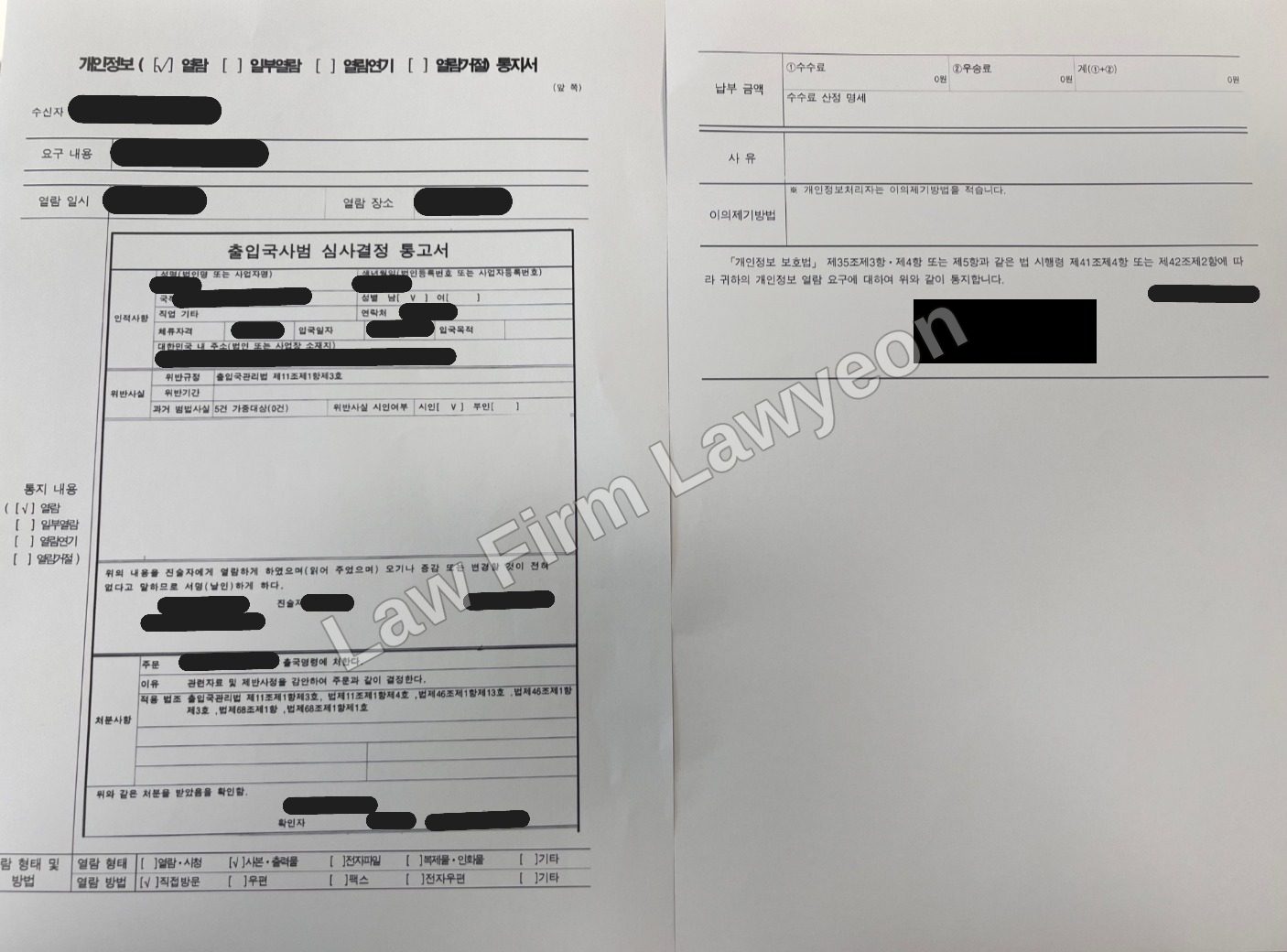
Applications before and after departure
| Current stage | Work involved | Distinct effects |
|---|---|---|
| Immigration review before a decision | Applicable criteria, permission to remain and exemption from an entry ban | Permission to remain and an entry-ban exemption are different decisions. |
| Decision issued, still in Korea | Cancellation or amendment, challenges and any necessary suspension of enforcement, and entry-ban relief | A review request or lawsuit does not itself remove the obligation to leave. |
| After departure | Confirmation of expiry or special lifting of the ban, followed by visa and entry procedures | Requirements linked to the intended purpose of entry remain after relief. |
Errors in the facts or criteria applied can support a challenge to the original decision. An application for special relief instead asks the authority to consider a present national-interest or humanitarian need for entry during the ban. A challenge to the original decision and an application for relief are not necessarily successive steps.
Challenges to removal and suspension of enforcement
An objection to a deportation order under the Immigration Control Act must be filed within seven days of receipt. That procedure does not apply to a departure order, and such an objection is not a mandatory prerequisite to every lawsuit seeking cancellation of a removal measure.
The general time limits for a revocation lawsuit are 90 days from learning of the decision and one year from the decision. Separate rules determine when the litigation period begins after an administrative appeal.
Filing suit does not automatically suspend a decision or its enforcement. Where departure or enforcement is imminent, grounds for suspension must also be established. An official’s promise to reconsider a matter, or receipt of a relief application, does not itself amend the existing decision.
A challenge may address errors of fact, incorrect criteria or an unlawful exercise of discretion. Arguments based on family or financial harm must also explain why removal is disproportionate to that harm.
Ordinary and special lifting of entry bans
Ordinary lifting follows expiry of the ban. Special lifting is sought on national-interest or humanitarian grounds while the ban remains in force. Even after expiry, other exclusion grounds and admission requirements remain subject to review.
Family life with a spouse or children in Korea, care of minor children, necessary treatment, and maintaining business operations or employment can support special relief. The review examines whether those circumstances establish a present need for entry.
Circumstances that existed before departure can also support special relief. If the original decision already assessed those circumstances, the application must explain why entry is now necessary despite that earlier assessment.
Entry for family care, treatment or business
An application based on a family member’s illness should address the severity of the condition, current care arrangements and the care the applicant needs to provide. An applicant seeking treatment must establish a current need for treatment in Korea in addition to any past medical history.
A business-based application explains the need for the applicant’s presence through actual operations, employment relationships and the applicant’s role. Incorporation or business registration alone may not adequately establish that need.
The review also considers the nature and repetition of past offences and events since the original decision. Even where a settlement or remorse contributed to a suspended sentence, grounds for exemption from or lifting of the entry ban must be presented separately.
Lawyeon identifies the grounds for relief supported by the client’s circumstances, prepares legal submissions and evidence, and responds to requests for further information.
Visa applications and admission after relief
Lifting a ban does not restore the previous residence status. An applicant who needs a visa must meet the requirements for the intended activities, obtain the visa and pass the admission inspection.
Living with family or personally operating a Korean business, as described in the relief application, also informs the subsequent visa application. The residence status must permit the activities the applicant plans to undertake after returning.
Law Firm Lawyeon Immigration Law Center provides legal services specialized in the integrated handling of Korean immigration and visa matters together with criminal cases and immigration-violation reviews, built on extensive case experience, professional networks, and practical knowledge.
The Center brings together attorneys Junwoo Min, Dohyun Nam, and Seungchul Kim, criminal-law specialists with extensive immigration advisory experience, and Senior Advisor Taemin Ahn. Mr Ahn has served at the Seoul Global Center, headed a Ministry of Justice Global Start-up Immigration Center, and served on the Foreign Workers' Rights Protection Council of the Seoul Regional Employment and Labor Administration. Together, they established Law Firm Lawyeon's dedicated immigration practice.
In particular, for departure orders and entry-ban dispositions that follow a final criminal conviction, the Center presents effective solutions through an integrated strategy spanning criminal defense, objections to the disposition, and applications to lift the entry ban, and it supports stable business activity in Korea by managing many clients' immigration risk.
This article is intended as general information about the relevant legal framework and is not legal advice on any individual matter. Determinations concerning immigration status may differ depending on specific facts such as residence history, income and contractual relationships. If your situation requires individual review, you may request a consultation with the Immigration Law Center of Law Firm Lawyeon (lawyeon-immigration.com).